The big why
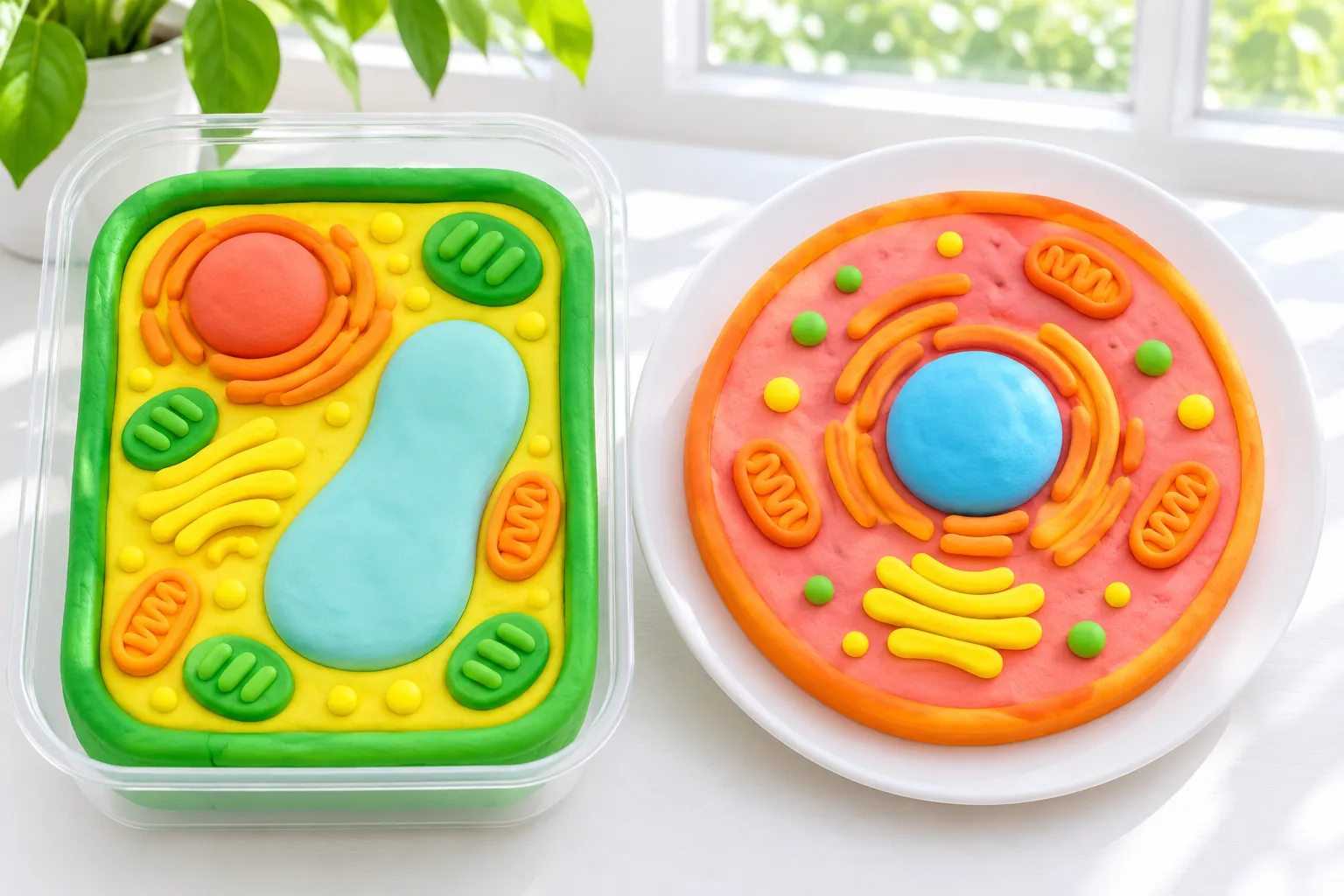
Why are plant cells box-shaped but animal cells round?
A stiff cell wall holds each plant cell in shape. Animal cells have only a flexible membrane, so they can take almost any shape.
On this page
- Plant and animal cell diagrams side by side
- Differences between plant and animal cells
- Similarities between plant and animal cells
- Plant vs animal cells: a Venn diagram
- Why are plant and animal cells different?
- Are all plant and animal cells like the diagrams?
- Key facts to remember
- Check your understanding
- Frequently asked questions
Quick answer
Plant and animal cells are both eukaryotic cells, so they share a cell membrane, , a nucleus, and ribosomes. The main differences are that only plant cells have a rigid cell wall, for photosynthesis and a large permanent vacuole. Because of the wall, plant cells usually have a fixed, box-like shape, while animal cells are rounder and more flexible.
Plant and animal cell diagrams side by side
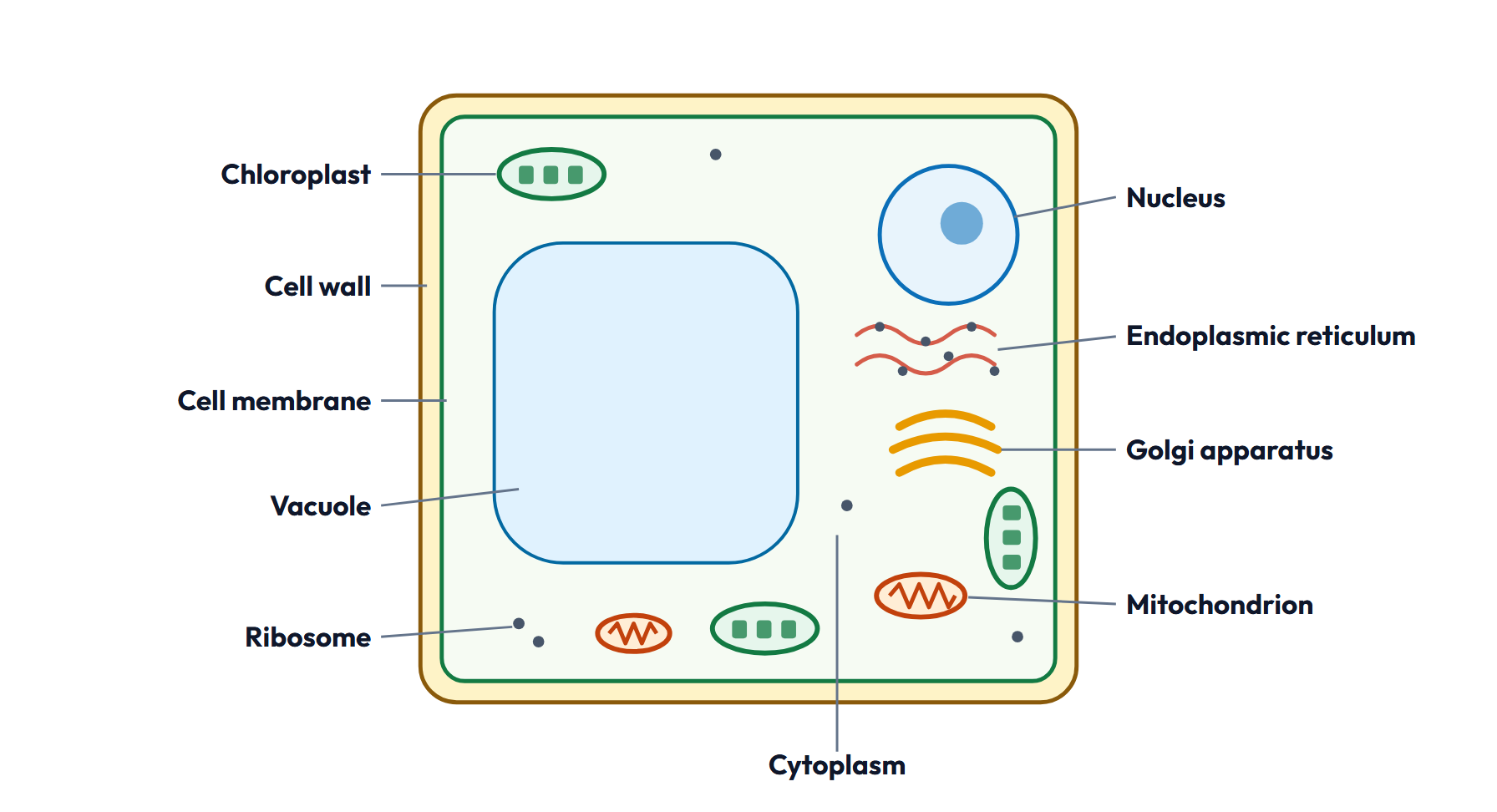
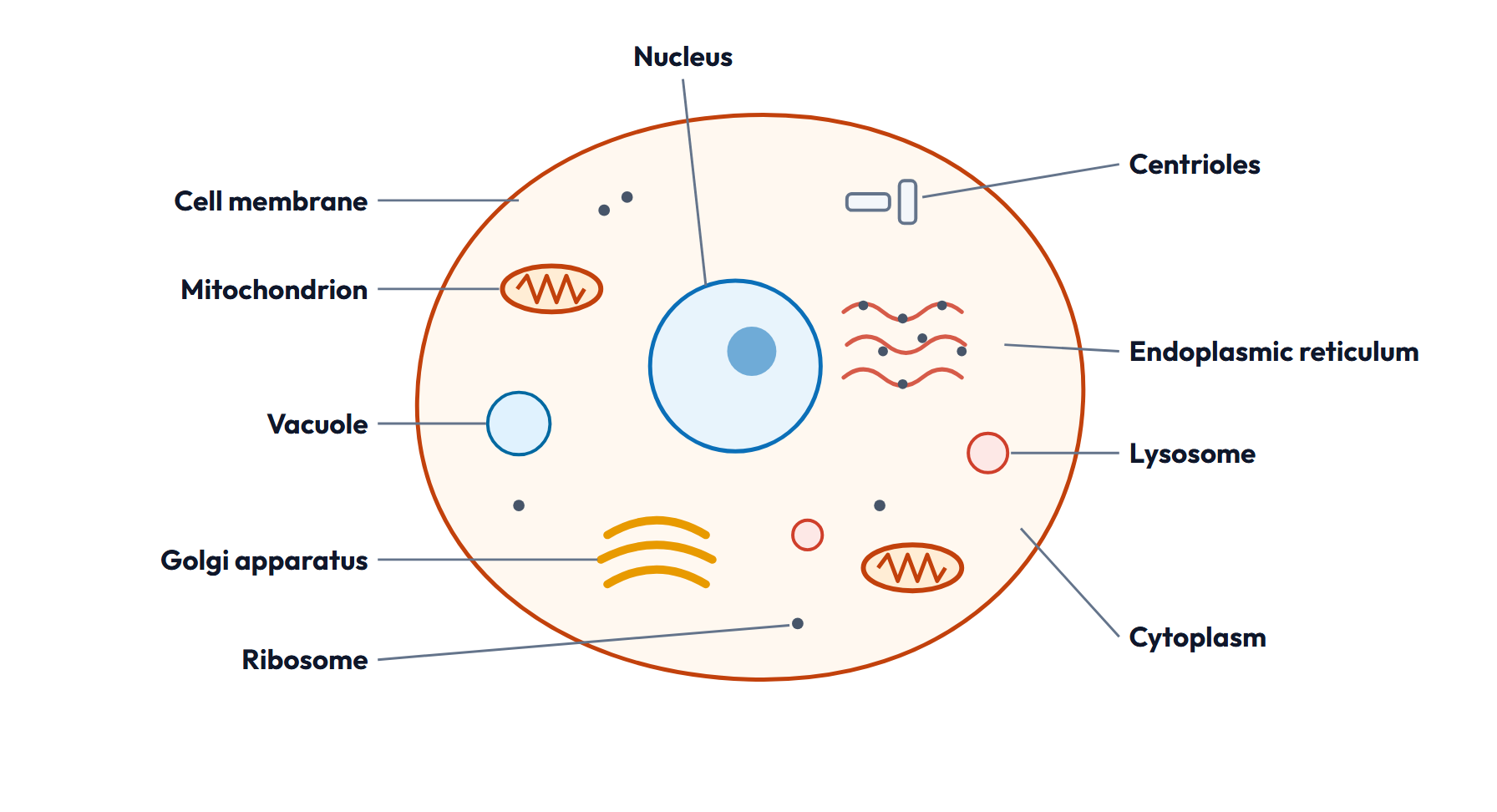
Differences between plant and animal cells
| Feature | Plant cell | Animal cell |
|---|---|---|
| Cell wall | Yes, made of | No |
| Shape | Fixed, often box-shaped | Flexible, often rounded |
| Chloroplasts | Yes, in green parts | No |
| Vacuole | One large, permanent central vacuole | Small, temporary vacuoles, if any |
| Energy store | Glycogen | |
| Centrioles | Absent in most plants | Present |
| Lysosomes | Rare; the vacuole does a similar job | Present |
| Size | Usually larger, about 10 to 100 µm | Usually smaller, about 10 to 30 µm |
| How it gets food | Makes its own by photosynthesis | Takes in food the animal has eaten |
Similarities between plant and animal cells
Plants and animals are both made of eukaryotic cells, which means their DNA is kept inside a nucleus. So they share all of these:
| Part | Job in both cells |
|---|---|
| Cell membrane | Controls what enters and leaves |
| Cytoplasm | Where most chemical reactions happen |
| Nucleus | Holds the DNA and controls the cell |
| Mitochondria | Release energy by |
| Ribosomes | Make proteins |
| Endoplasmic reticulum | Makes and transports proteins and fats |
| Golgi apparatus | Packages and sends out proteins |
Plant vs animal cells: a Venn diagram
A Venn diagram is a quick way to sort the parts. Here it is as a three-column list.
| Only in plant cells | In both | Only in animal cells |
|---|---|---|
| Cell wall | Cell membrane | Centrioles |
| Chloroplasts | Cytoplasm | Lysosomes (mostly) |
| Large permanent vacuole | Nucleus | Small temporary vacuoles |
| Starch grains | Mitochondria | Glycogen granules |
| Ribosomes | ||
| ER and Golgi apparatus |
Why are plant and animal cells different?
Every difference comes down to how plants and animals live.
- Plants can't move, so they need support. The cell wall and the water-filled vacuole work together. The full vacuole presses each cell against its wall, making it firm, and millions of firm cells hold the plant upright. A plant short of water loses this pressure and wilts.
- Plants make their own food. That needs chloroplasts in every green cell. Animals eat other living things, so their cells have none.
- Animals need to move and change shape. Without a stiff wall, animal cells can squeeze, stretch and contract. Muscle cells shorten, blood cells bend through tiny vessels, and white blood cells wrap around germs.
- Plants store starch, animals store glycogen. Both are made of glucose. Starch suits a plant's slow, steady use of energy; glycogen can be broken down quickly when an animal suddenly needs to move.
Are all plant and animal cells like the diagrams?
No. The diagrams show a "typical" cell, but real cells vary a lot.
- Not all plant cells have chloroplasts. Root cells and onion bulb cells grow in the dark and have none.
- Not all animal cells have a nucleus. Mature human red blood cells lose theirs to make room for haemoglobin.
- Fungi are different again. They have a cell wall, like plants, but it is made of chitin, not cellulose, and they have no chloroplasts.
- Bacteria are much simpler. They are prokaryotic cells, with no nucleus and no mitochondria.
For every part labelled in detail, see the plant cell diagram and the animal cell diagram.
Cheat sheet
Key facts to remember
Plant vs animal cells
- Both plant and animal cells have a cell membrane, cytoplasm, nucleus, mitochondria and ribosomes.
- Only plant cells have a cell wall, chloroplasts and a large permanent vacuole.
- Plant cells are usually box-shaped; animal cells are usually rounded and flexible.
- Plants store energy as starch; animals store it as glycogen.
- Most animal cells have centrioles and lysosomes; most plant cells don't have centrioles.
From Cluecub · www.cluecub.com/plant-vs-animal-cells
Practice questions
Check your understanding
5 questions
1. Which three structures are found in plant cells but not animal cells?
Only plant cells have a cellulose cell wall, chloroplasts and a large permanent vacuole.
2. Which structures do both plant and animal cells have?
Both are eukaryotic cells, so both have a nucleus, and both release energy with mitochondria.
3. Why do animal cells not need a cell wall?
A flexible membrane lets animal cells change shape. Animals are supported by skeletons, not cell walls.
4. How do plants and animals store energy?
Plants store glucose as starch. Animals store it as glycogen, mainly in the liver and muscles.
5. Which statement is true?
Plant cells need mitochondria to release energy by respiration, as well as chloroplasts to make glucose.
Frequently asked questions
What are 3 differences between plant and animal cells?
Plant cells have a cellulose cell wall, chloroplasts and a large permanent vacuole. Animal cells have none of these.
What are the similarities between plant and animal cells?
Both have a cell membrane, cytoplasm, a nucleus, mitochondria, ribosomes, endoplasmic reticulum and a Golgi apparatus, because both are eukaryotic cells.
Do plant cells have mitochondria?
Yes. Plant cells have both chloroplasts, to make glucose, and mitochondria, to release energy from it.
Why are plant cells bigger than animal cells?
Mostly because of the large vacuole, which fills with water and makes the cell bigger without adding much cytoplasm. A stiff cell wall lets the cell hold this size.
Do plant cells have lysosomes?
Very few, and many school textbooks say none. In plant cells, the large vacuole contains digestive and does a similar job of breaking down waste.