Plant & animal cells
What living things are built from, what every part of a cell does, and how plant and animal cells differ. Work through the guides in order, or jump to the one you need.
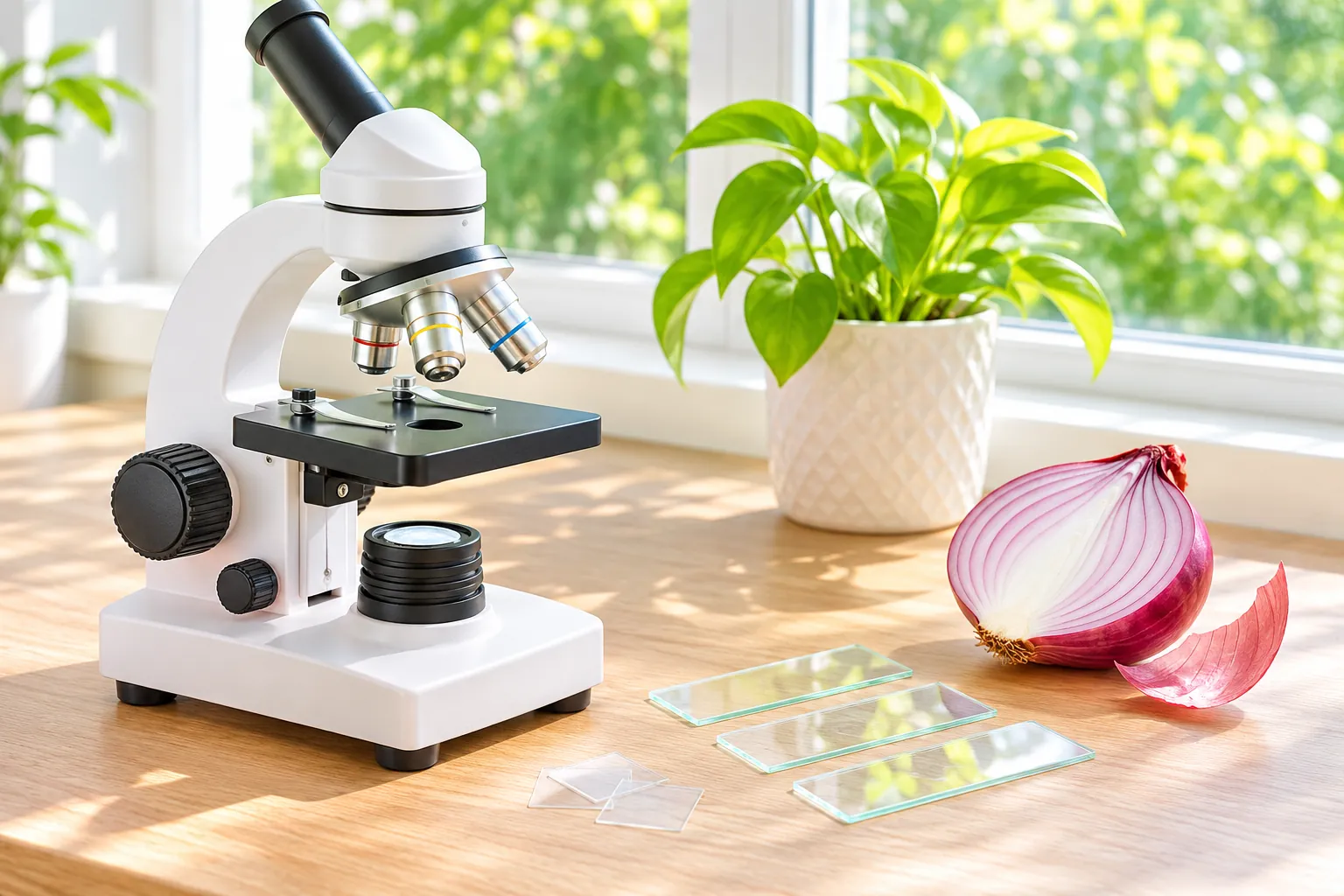
Every living thing is made of cells
A cell is the smallest unit of life. Some living things, such as bacteria, are a single cell. You are made of around 30 trillion. Plant and animal cells share the same basic parts: a cell membrane around the outside, a nucleus that holds the DNA, and cytoplasm filled with smaller structures called organelles, each with its own job.
Plant cells have three extra parts that animal cells don't: a rigid cell wall, chloroplasts for photosynthesis, and a large permanent vacuole.
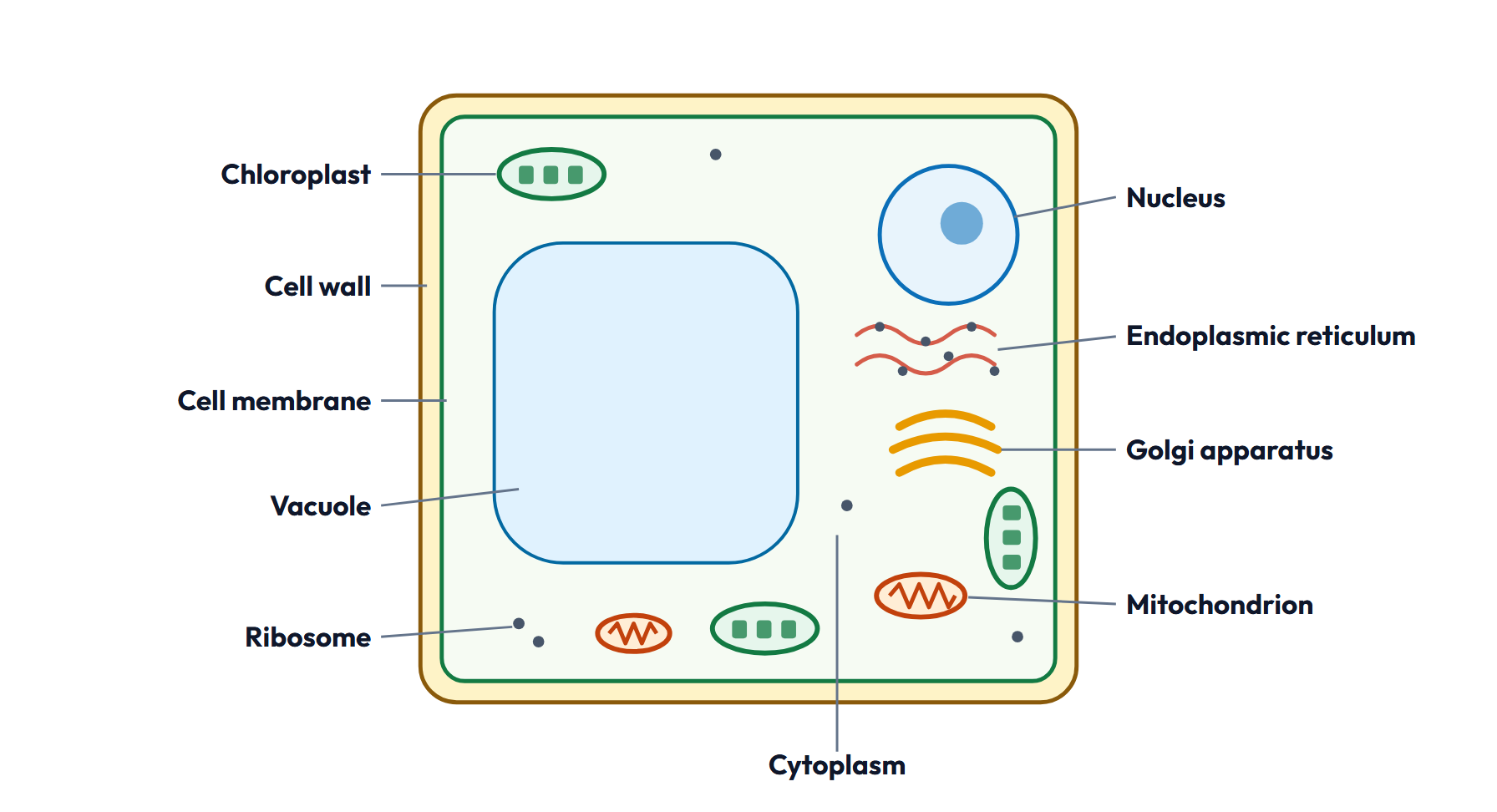
Plant and animal cells at a glance
| Part | Plant cell | Animal cell |
|---|---|---|
| Cell membrane | Yes | Yes |
| Nucleus | Yes | Yes |
| Cytoplasm | Yes | Yes |
| Mitochondria | Yes | Yes |
| Ribosomes | Yes | Yes |
| Cell wall | Yes, made of cellulose | No |
| Chloroplasts | Yes, in green parts | No |
| Vacuole | One large, permanent vacuole | Small, temporary vacuoles, if any |
| Shape | Fixed, often box-shaped | Flexible, often rounded |
Learning path
The first guides are ready, and more are on the way. Start with guide 1 and work down, or jump straight to the one you need. Each guide links to the next.
- 1
Plant cell diagram
Why don't plants fall over without a skeleton?
Every part of a plant cell labelled, what each one does, and how to draw a clear plant cell diagram of your own.
- 2
Animal cell diagram
Why do your red blood cells have no nucleus?
Every part of an animal cell labelled, what each one does, and a labelling activity to check you know them.
- 3
Plant vs animal cells
Why are plant cells box-shaped but animal cells round?
What plant and animal cells share, the differences that matter, and why each kind of cell is built the way it is.
- 4
Cell organelles and their functions
- 5
The nucleus
- 6
Mitochondria
- 7
The cell membrane
- 8
The cell wall
- 9
The Golgi apparatus
- 10
The endoplasmic reticulum
- 11
Ribosomes
- 12
The vacuole
- 13
Lysosomes
- 14
The cytoplasm
- 15
Prokaryotic vs eukaryotic cells
- 16
Cell theory
What you'll be able to do
By the end of this topic you will be able to:
- draw and label a plant cell and an animal cell from memory
- say what each organelle does, and which ones are found only in plant cells
- explain how the structure of a cell suits its job
- compare plant and animal cells, and prokaryotic and eukaryotic cells
This topic links closely to photosynthesis and cellular respiration, which happen inside the chloroplasts and mitochondria.